
Your ears lie to you after twenty minutes.
Not because you are bad at this. Because that is what ears do. Sit with a bright mix long enough and it stops sounding bright. Sit with a thin one and it starts to sound normal. You adjust, the song does not.
A reference track resets that. You put on a record that you know sounds right, and in three seconds you hear exactly where yours is off. No meter tells you that as fast.
The trap is what you do next.
Use this rule: a reference tells you what your song sounds like compared to a finished record. It does not tell you what your song should be.
What a reference can actually copy
Mastering works on the finished stereo file. Everything in your song is already glued together in there. So a reference can only influence things that apply to the whole mix at once.
That means it can move these:
- Tone. How much sub, low end, midrange and top the song has overall.
- Weight. Whether the low end feels tight or loose, and how far down it reaches.
- Width. How far the song spreads out beyond the middle of the speakers.
- Loudness. Where the song lands on a loudness meter, and how hard it is pushed to get there.
- Punch. How much the hits come forward against the body of the track.
And it cannot move these, no matter how good the reference is:
- A vocal that is too quiet in your mix.
- A kick that disappears under the bass.
- A reverb that is too long.
- Anything that is simply not in your file.
That last one catches people. If your mix has no energy above 12 kHz because the source was an MP3, a reference cannot put air there. It can only turn up what is already present, which usually means turning up hiss.
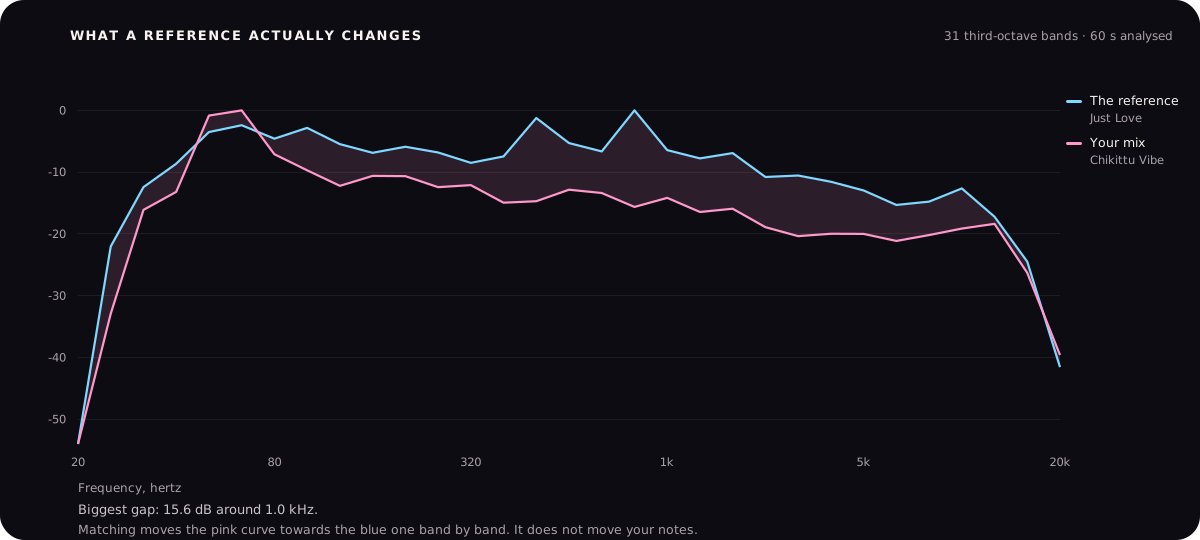
Two ways engineers do this by hand. One matches the curve for you, the other shows you the two curves and leaves the moves to you.
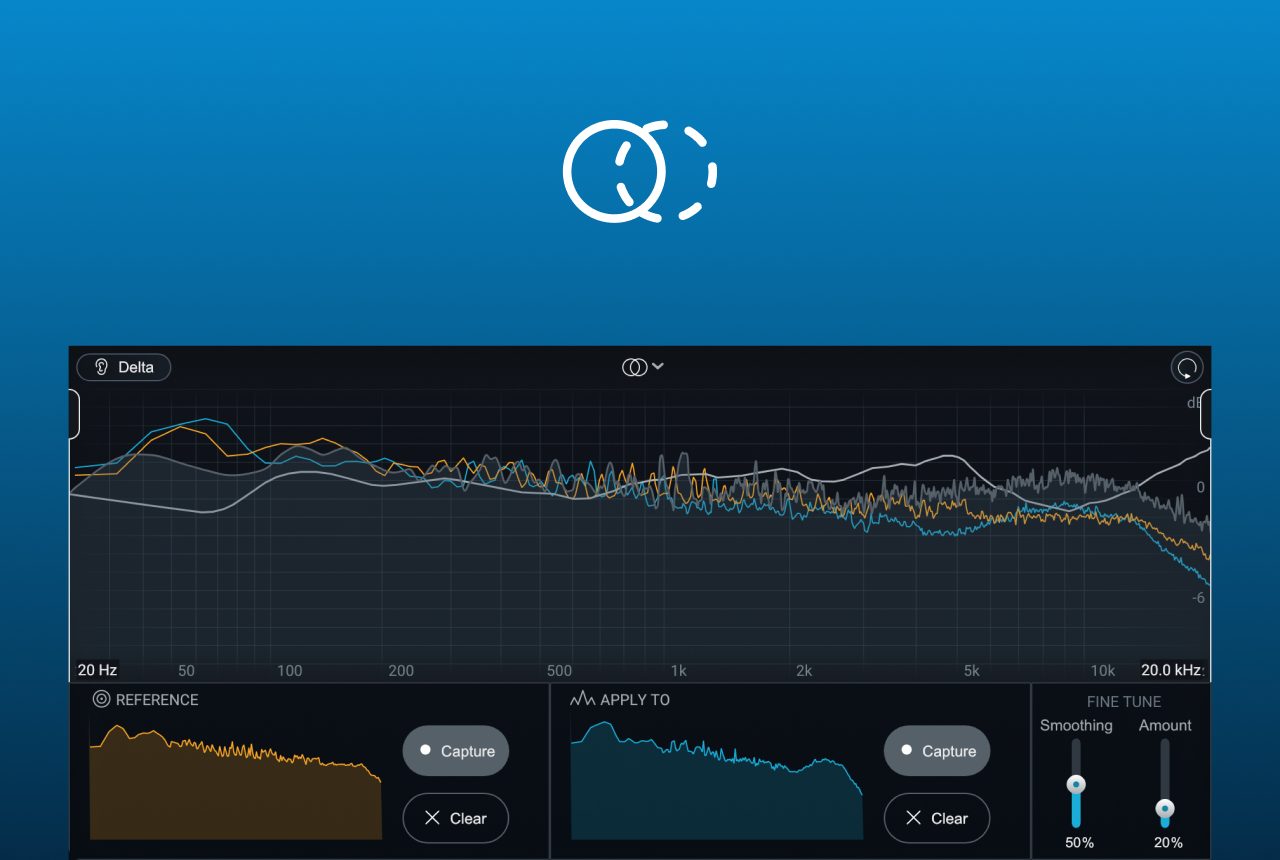
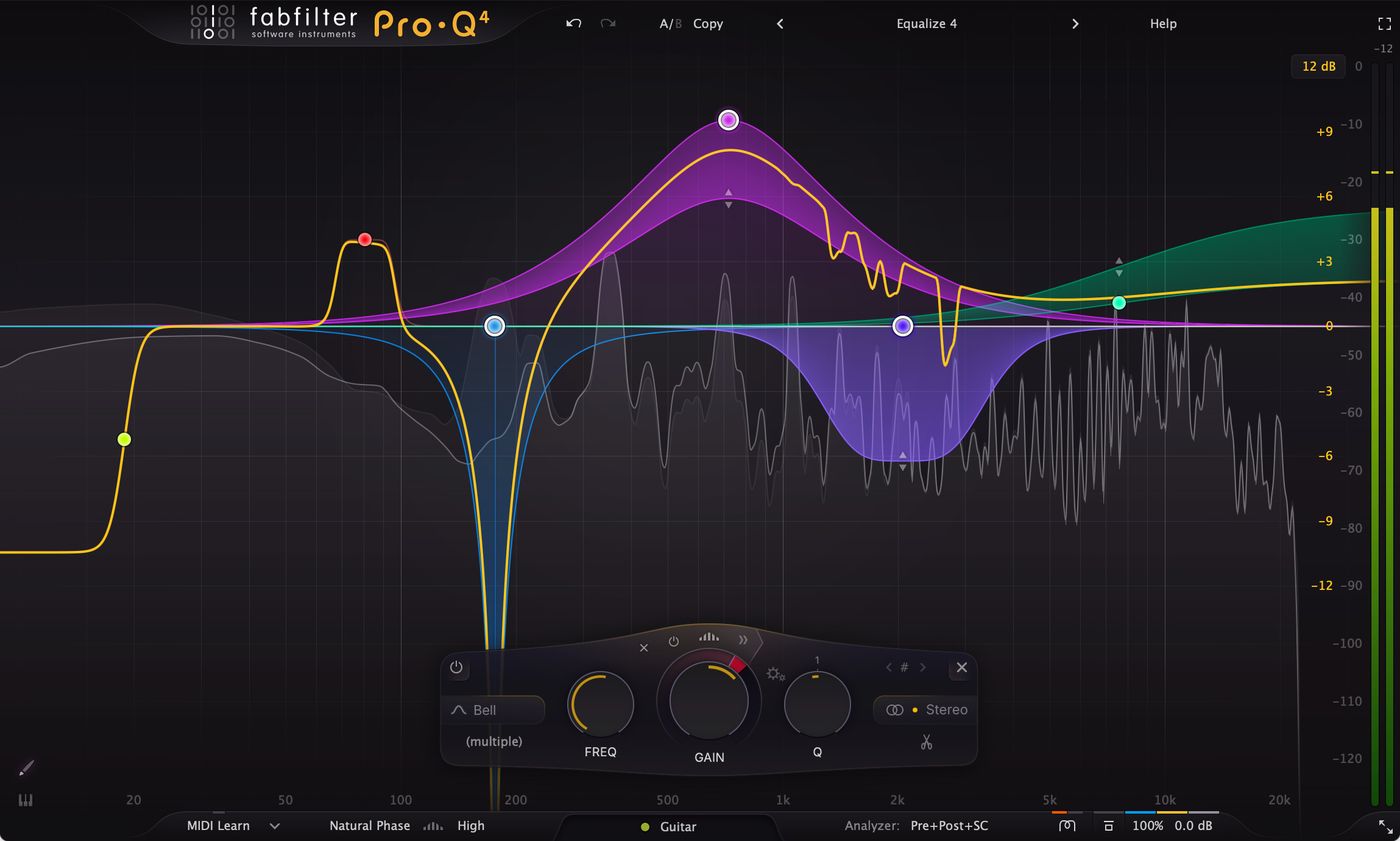
These are editorial examples, not endorsements or a buying list. Product names and interface images belong to their respective owners.
Match the loudness before you judge anything
This is the step almost everyone skips, and skipping it makes the whole exercise worthless.
Louder sounds better. That is not an opinion, it is how hearing works. Play a commercial master next to your unfinished one and the commercial master wins automatically, because it is 6 dB louder. You will then go and do damage to your song chasing a difference that was only volume.
So turn the reference down until the two feel equally loud. Not until the meters match, until your ears say they are level. Then listen again. Most of the time half the gap you thought you heard disappears, and what is left is the real difference worth fixing.
Quick check: if you cannot tell which one is playing when you switch, you have matched them properly. Now you can judge tone.
How to choose a reference that helps
Pick something in the same world as your song
Same rough style, same era, similar instrumentation. A modern club record is not a useful reference for an acoustic ballad. The tone targets are different for good reasons.
Pick a song you have heard on many speakers
You want a record you know on your phone, in a car and on headphones. Familiarity is doing most of the work here.
Use the best quality file you can get
Stream a lossy version and you are referencing the encoder as much as the record. If you own it, use the file you own.
Pick one, not five
Five references average out into mush. If you must use two, use one for low end and one for top, and know which is which.
Do not pick the loudest record you own
You will end up matching its loudness rather than its tone, and loudness is the one thing you should decide for your own song.
How reference matching works here
The reference feature on this site reads a finished record the way I would read it by ear, but faster and more precisely than I can.
It measures the whole tonal shape across 31 bands from the sub up to the air, how wide the record sits in four bands, how hard its hits come through in three, and where it ends up for loudness. Each of those becomes a target. Your song is then moved onto them band by band, and you get told how close it landed.
What it will not do is pretend. If something is not in your mix, it tells you rather than inventing it. That honesty is the whole point, because the alternative is a tool that turns up noise to hit a number.
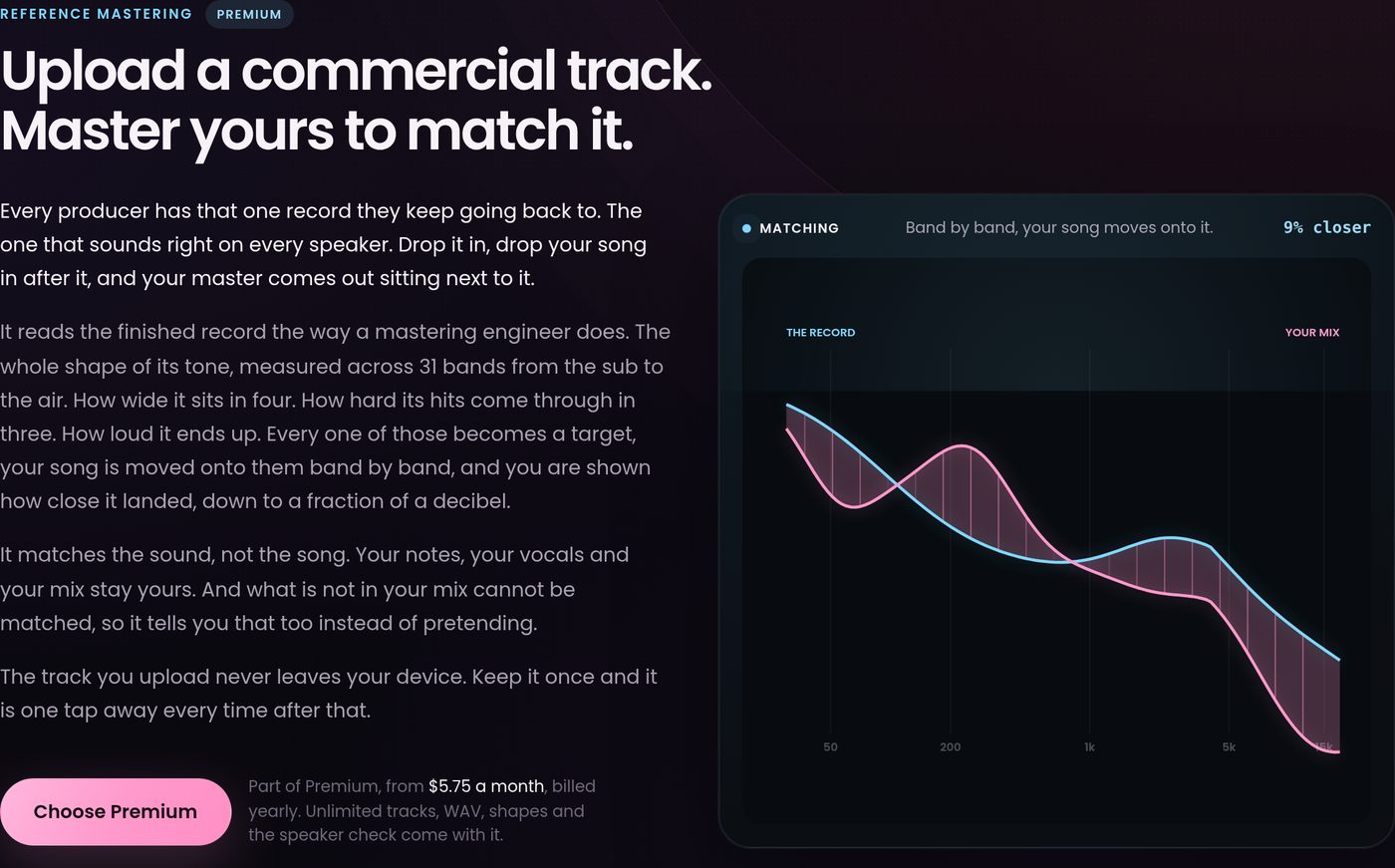
Reference matching is included with your 2 shared trials and with Premium. One membership unlocks unlimited use of every online tool.
When a reference is the wrong tool
Sometimes the honest answer is to put the reference away.
If your song is deliberately strange, matching it to a normal record will sand off the reason it is interesting. If your song is genuinely unfinished, a reference will tempt you to fix mix problems with mastering moves, and those fixes never hold up. And if you are matching a record because you want your song to be that record, no amount of tonal matching gets you there. That is a writing and arrangement job.
A reference is a measuring stick. It is not a destination.