
Nobody publishes an honest price list, so here is one.
These are real rates from the services’ own pricing pages, read in September 2026. Every one is for a single stereo track. I have left out the studios that do not publish rates, because guessing at those would be useless to you.
| Service | Published price per track | Turnaround and revisions as published |
|---|---|---|
| Safe&Sound Mastering | £30 | About 1 to 2 days. Revisions free. |
| Mr Mix & Master | $39.99 standard, $74.99 priority | Standard queue is 3 to 4 weeks. Priority is 3 to 5 days. Unlimited revisions. |
| Sage Audio | $49 | Not published. |
| Major Mixing | $79 | 2 to 3 days. Six revision rounds. |
| Studios 301 | AU$110 to AU$230 plus tax, by engineer | Rush available for a surcharge. Revisions not published. |
| Abbey Road | From $130, up to $325 for the top tier | Up to 5 working days, faster for a fee. One set of revisions. |
| Marsh Mastering | $300 | 48 to 72 hours. Revisions billed separately. |
A few things jump out of that table once you look at it properly.
- The spread is enormous. Ten times between the cheapest and the most expensive, for a job described in the same words.
- Cheap often means slow. The lowest price in that list comes with a three to four week queue. Paying more at the same company mostly buys you a shorter wait.
- Revision policy is not standardised at all. One set, six rounds, unlimited, or billed per recall. This is worth checking before you pay, not after.
- At the top end you are buying a person. The higher tiers at the big studios mostly get you a specific named engineer rather than a different process.
Worth saying: the most respected mastering houses do not publish rates at all. They work on enquiry. If someone quotes you a number for those, they made it up.
What a human actually gives you
It is not magic ears. It is four things a tool cannot do.
- They tell you what is wrong. A good engineer hears that your vocal is sitting 2 dB low and tells you to fix it in the mix rather than quietly compensating. That feedback is often worth more than the master.
- They make decisions about your song specifically. Not about songs like yours. About the fact that your second chorus has a problem the first one does not.
- They take responsibility. If it comes back wrong, there is a person to talk to, and a revision process.
- They have heard thousands of records on one set of speakers. That calibration is real, and it is the thing that takes years to build.
What you are not buying is a guarantee. A mastering engineer working on a mix with a buried vocal will give you a well-balanced master of a song with a buried vocal.
What an online tool gives you
Different list, and I will be straight about the limits.
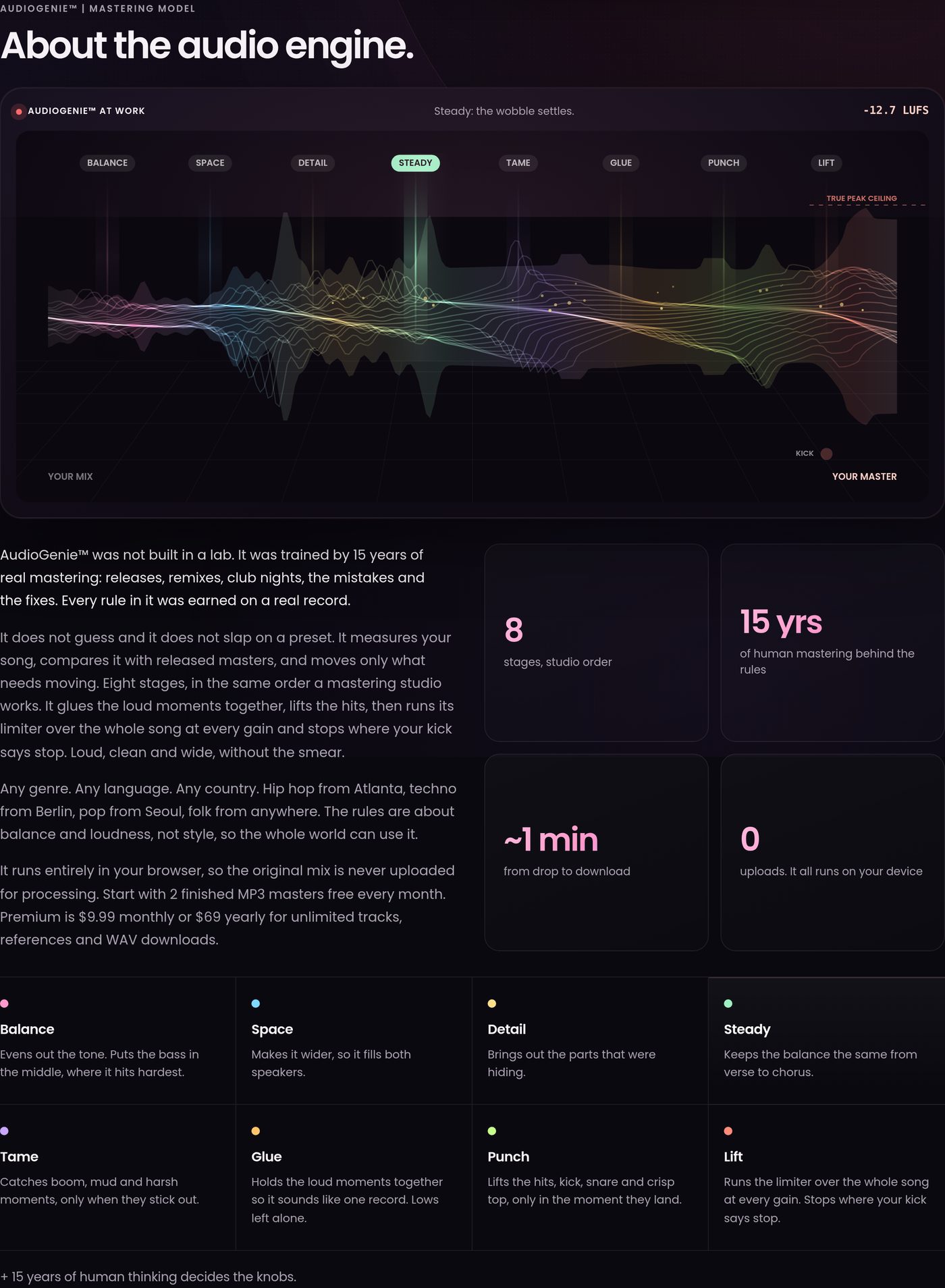
- Speed. A minute, not a week. That changes how you work, because you can hear a mastered version while the mix is still open.
- Price at volume. If you release often, the per-track cost of a human becomes the reason you release less.
- No awkwardness about revisions. Run it again. Change the setting. Run it again.
- It is a good learning tool. Hearing what mastering does to your song, repeatedly and immediately, teaches you what your mixes need.
And the limits, honestly. A tool does not know what the song is trying to be. It cannot tell you the arrangement is the problem. It will not push back on a bad decision. And if it gets something wrong, your only recourse is to change a setting and try again.
Two of the online tools people compare most often.
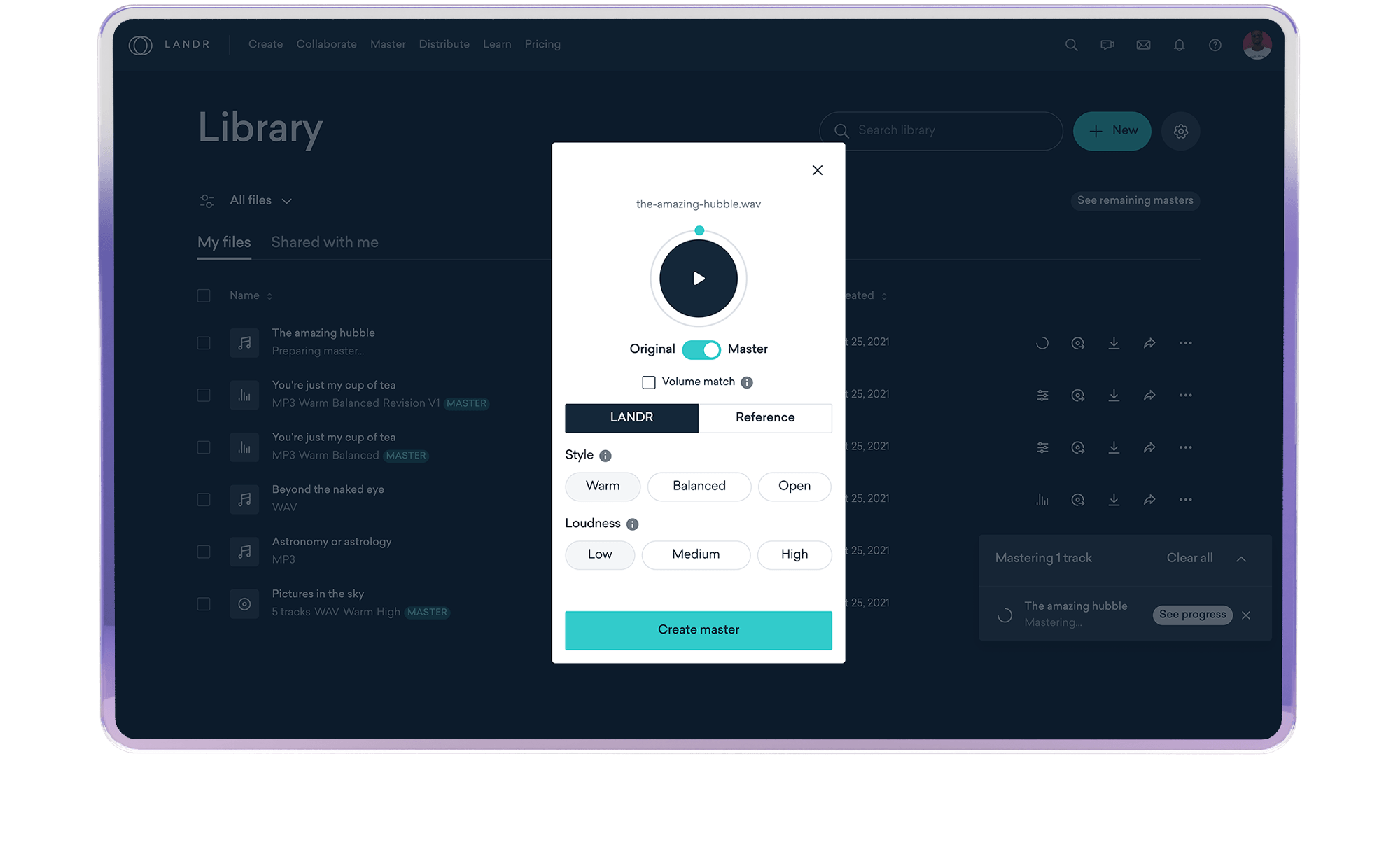
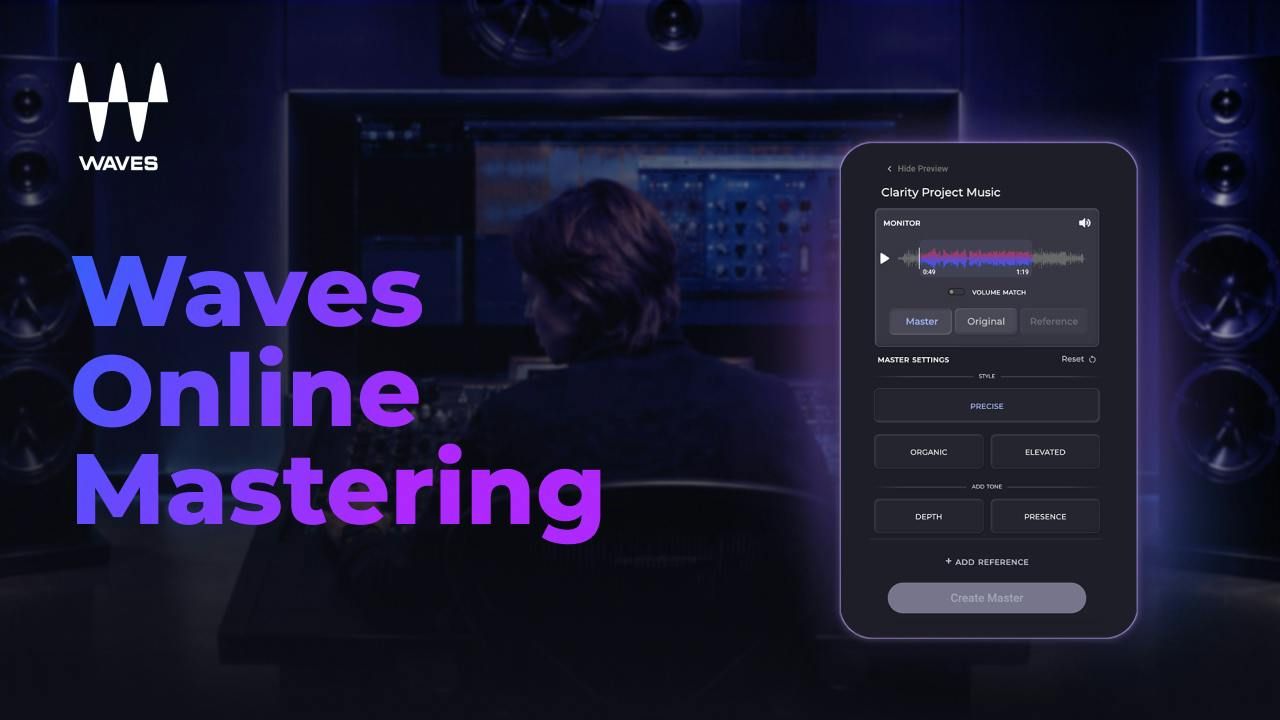
These are editorial examples, not endorsements or a buying list. Product names and interface images belong to their respective owners.
How to actually choose
Forget the general argument. Answer these about the specific song in front of you.
| If this is true | Then |
|---|---|
| There is money behind the release, a marketing push or a label | Pay a person. The cost is small next to everything else you are spending. |
| Something sounds wrong and you cannot name it | Pay a person. You are buying the diagnosis, not the master. |
| It is a demo, a reference or a work in progress | Use a tool. Do not spend money on a version that will change. |
| You release a track every week or two | Use a tool for most, and pay a person for the ones that matter. |
| You need it today | Use a tool. Published human turnaround starts at about a day and often runs to a week. |
| You are learning how mastering works | Use a tool, repeatedly, and compare against records you love. |
| The mix is genuinely finished and you are proud of it | Either works. This is the case where a human will add the most polish. |
A middle path that works: master it yourself with a tool, release it, and put the money towards a human for the single you are actually pushing. Most independent artists I know end up here.
Where I stand, given I sell one of these
I built the mastering tool on this site, so I am not neutral. Here is my actual position anyway.
I use my own tool for most of what I release, because I make club and kuthu remixes at a pace where paying per track would not work, and because I mastered my own records for years before I built it.
If I were putting out a single with a real budget behind it, I would send it to a person. Not because the tool would embarrass me, but because a second set of trained ears on something that matters is worth the money, and because being told the truth about your own mix is hard to buy any other way.
Anyone who tells you an automated tool is always better than a human, or that a human is always better than a tool, is selling you something. They do different jobs.